Introduction
Care homes across the United Kingdom are transforming the way they operate as digital care records, smart devices, wireless medical tools, and cloud based platforms become essential to daily activity. This shift means that the strength of the digital foundation has never been more important. Every care environment needs reliable connectivity, secure data flows, and the confidence that staff can access the systems they rely on without disruption. Early improvements often begin with the right networking solution, making it a cornerstone of safe and efficient care.
The rise of sensor based monitoring, electronic medication management, and remote family communications means care homes now depend on technology in ways that were far less common a decade ago. Residents expect access to digital entertainment and personal communication, staff require access to clinical systems at all times, and leadership teams need real time data to monitor performance across the estate. Reliable networking does not just support operations, it enables better decision making, reduces administrative burden, and creates a safer environment for everyone.
This blog explores eight powerful strategies that strengthen networking for connected care homes while raising standards in safety, efficiency, and resilience. The aim is to provide leadership teams with clear and practical guidance that helps build a more modern digital care environment.
Essential benefits of a networking solution for connected care homes
A solid digital foundation supports every operational area within a care home. When planning investment or considering upgrades, leadership teams need to understand the advantages that the right design can deliver. A networking solution supports the integration of critical systems such as nurse call alerts, medication dispensing devices, and electronic care plans, ensuring they run smoothly and communicate effectively. It also reduces the risk of downtime, which can otherwise lead to missed records, delayed updates, or manual workarounds that increase pressure on staff.
Strong connectivity improves the experience for residents by supporting streaming, personal communication, and online engagement activities. Many residents use tablets or smart speakers to stay connected with family, enjoy music, or access entertainment. A well designed network ensures these experiences are accessible without slowing down operational systems. This greatly improves resident wellbeing, especially for individuals who rely on digital stimulation as part of their daily routine.
The operational benefits are equally significant. Care teams need instant access to digital care platforms to update records, check medication schedules, or share information with colleagues. When the network performs consistently, administrative tasks take less time, errors are reduced, and staff can focus more energy on personalised care. Leaders also gain access to clearer data, which improves inspection readiness, oversight, and reporting.
Reliability is especially important when homes introduce smart devices. Temperature sensors, movement monitors, environmental controls, and fall detection technologies all depend on constant connectivity. The right infrastructure ensures these systems work together effectively and securely. Without strong design and correct configuration, homes often experience dropouts or interference that can undermine the purpose of these tools.
Building care home resilience with a networking solution
Security and resilience are two of the biggest challenges facing modern care environments. Connected devices provide enormous benefits, but they also introduce new points of vulnerability if they are not correctly managed. A networking solution must be designed with these risks in mind. This means not only having reliable WiFi and wired connections but also embedding the right controls, monitoring, and separation of services.
Network segmentation plays a critical role in protecting sensitive information. Separating clinical systems, administrative tools, resident WiFi, and smart devices prevents a single fault from affecting the whole environment. This also makes it harder for cyber incidents to spread between systems. Segmentation ensures that even if a device becomes compromised, the impact is limited and disruption is kept to a minimum.
Cyber security also requires active monitoring. Care homes often use a mixture of legacy systems, cloud applications, and mobile devices, creating a complex environment that can be difficult to secure. Monitoring tools help identify unusual patterns, blocked attempts, or early indicators of weakness. When combined with strong access controls, staff logging policies, and regular updates, this approach reduces risk and supports compliance with sector expectations around safe data handling.
Resilience also relies on the physical aspects of the network. Hardware needs to be placed correctly, configured accurately, and protected from failure. Switches, access points, and cabling must be installed professionally and designed to support the size and layout of the home. Many older buildings require creative solutions to ensure consistent coverage in thick walled areas or multi floor layouts. A resilient strategy considers these challenges and provides consistent performance regardless of building shape, materials, or age.
Designing WiFi that supports digital care growth
WiFi is now central to almost every care home operation, from staff workflows to resident engagement. Poor coverage can disrupt medication rounds, limit access to digital care plans, and create frustration for staff who depend on mobile devices throughout the building. Designing strong WiFi begins with a detailed assessment of the environment. Signal strength, interference, building structure, and device density all need to be studied before installation begins.
Care homes require far more reliability than typical residential environments. A single household might have a handful of devices, but a care home can easily exceed one hundred. Staff handhelds, workstations on wheels, resident devices, smart TVs, and medical tools all compete for bandwidth. This means WiFi solutions must be planned with professional grade equipment, correct channel management, and the right placement of access points to avoid overcrowding.
Modern WiFi also needs to support roaming. Staff should be able to move between rooms, floors, or wings without losing connection. Roaming ensures that digital care updates, internal calls, and important clinical information flow smoothly without interruption. This is particularly valuable during medication rounds or emergency responses when seconds matter.
Future proofing is another important consideration. Technology within the care sector is evolving rapidly, especially as more homes introduce assisted living devices, environmental sensors, and real time monitoring systems. WiFi networks need to be ready for higher bandwidth usage, new device types, and greater levels of automation. A scalable design allows homes to adopt new tools without having to rebuild their infrastructure every few years.
Security controls within the WiFi environment should also be configured carefully. This may include separating guest networks from operational systems, applying safe browsing filters, and ensuring strong authentication methods for staff devices. Protecting the wireless environment is critical to maintaining safe daily operations and meeting regulatory expectations for data protection.
Building network strategies that support future innovation
Care homes are entering a new period of digital growth, especially with the rise of artificial intelligence and automation. A robust network is required to support this shift. Predictive analytics, digital care audits, automated reporting, and AI based monitoring tools all depend on strong connectivity and secure design.
Homes also need to prepare for integrated environmental systems. Modern heating, lighting, and energy solutions often rely on network communication to function efficiently. Improving the network puts homes in a better position to adopt greener technology and manage energy usage more effectively.
A strong network also supports multi site care providers. Groups with several homes benefit from consistent infrastructure, shared reporting tools, and centralised monitoring. Establishing a standardised approach makes it easier to maintain quality across multiple locations and ensures every building meets the same standard of digital readiness.
Investment in a strong foundation also reduces long term costs. Once the correct architecture is in place, adding new services becomes simpler, cheaper, and less disruptive. It prevents the need for repeated rebuilds and supports continuous improvement as new demands emerge.
Below are eight effective networking solutions that every connected care home should consider when building a reliable, secure, and future ready digital environment. These solutions support safer care delivery, reduce operational pressure, and improve the experience for both residents and staff.
1. High-performance Internet & WiFi as the foundation of the networking solution
A true networking solution starts with dependable connectivity. Many care homes still struggle with poor broadband, legacy telephone lines and weak WiFi coverage. For example, CareDocs emphasise that unreliable internet undermines digital care‐recording and means more time away from residents.
Key steps:
- Choose business‐grade broadband, ideally fibre, which supports high download/upload rates and low latency.
- Deploy WiFi access points across all zones of the building like resident rooms, communal areas, staff offices etc. to avoid dead spots.
- Separate staff, resident and guest networks via VLANs to maintain security and performance.
- Routinely test upload/download speeds, checking at busy times and across different locations within the home.
By investing in a solid foundational networking solution, care homes position themselves to support digital care plans, telemedicine, remote monitoring and staff mobile working.
2. Structured cabling and wired network infrastructure
Wireless is vital, but a complete networking solution also requires a robust wired backbone. Data cabling (Cat5e, Cat6, Cat6a, fibre) is a key part of healthcare network infrastructure services.
Benefits of structured cabling include:
- Consistent network performance for servers, CCTV, nurse-call systems and critical devices.
- Reduced latency and packet loss compared to wireless alone.
- Future-proofing: cables can support higher speeds and more devices over time.
- Easier troubleshooting and maintenance thanks to standardised cabling layouts.
When designing your networking solution, make sure you understand building constraints (older structures, multiple floors, thick walls) and work with experienced cabling partners who understand the care home environment like us.
3. Guest networks and device segmentation in your networking solution
In a care home there are multiple types of users and devices: staff devices, resident tablets, visitor smartphones, IoT sensors, CCTV cameras, alarm systems. Your networking solution must manage these safely and efficiently.
Here are some best practices:
- Create separate SSIDs and VLANs for each category (staff, resident, guest, IoT).
- Use firewalls and traffic‐shaping to ensure that non‐critical guest traffic doesn’t impair systems that support care delivery.
- Implement quality‐of‐service (QoS) and prioritisation for devices which must remain online (e.g., nurse-call, telehealth).
- Enforce BYOD policies, ensuring visitors or relatives’ devices do not introduce security risks.
By doing so, your networking solution supports greater flexibility (resident tablets, family video calls, streaming services) while protecting key systems.
4. Secure wireless coverage and next-generation WiFi technology
Wireless technology is evolving rapidly and is central to modern care homes. WiFi solutions using brands such as Ubiquiti combined with cloud management offer powerful coverage and management for assisted living facilities.
For your networking solution consider:
- WiFi 6/6E (or newer) which supports higher device density, better performance in crowded environments and improved battery life.
- Mesh networks or multiple access points to cover multi-floor buildings with fewer dead zones.
- Centralised cloud management for monitoring, firmware updates, security threats and visitor access - reducing burden on on-site IT staff.
- Placement planning: communal lounge, corridors, bedrooms, outdoor patios - all need coverage.
A strong wireless component ensures that your networking solution empowers mobile carers, resident connectivity and emerging technologies rather than limiting them.
5. Managed network services and monitoring for resilience
Implementing the technologies is one part; maintaining them is another. A comprehensive networking solution for connected care homes should include ongoing monitoring, patching, support and incident response.
Key elements:
- Use managed service providers (MSPs) like us who understand health & social care requirements - data protection, uptime, device diversity.
- Real-time monitoring dashboards showing network health, traffic spikes, device anomalies.
- Scheduled reviews of infrastructure, usage patterns, and throughput; tuning the system as demands grow.
- Disaster recovery and redundancy planning: e.g., failover internet links, backup power for key network equipment.
By integrating managed services you ensure your networking solution stays effective, secure and aligned to your evolving care needs.
6. IoT, smart devices and integration into the networking solution
Connected care homes are increasingly leveraging Internet of Things (IoT) devices: wearables, environmental sensors, fall-detection systems, telehealth cameras. Your networking solution must be designed to accommodate these reliably.
Consider:
- Device inventory: map all sensors, cameras, alarms and their network requirements.
- Network segmentation: IoT devices often have different security and bandwidth profiles, so separate them logically.
- Edge computing: some environments benefit from local processing of sensor data to reduce latency. Research has explored architectures combining WLAN and fixed-wireless access for pervasive healthcare.
- Security by design: incorporate encryption, firmware management, device authentication.
Integrating IoT into your networking solution enables better resident monitoring, smarter care delivery and opens possibilities for innovation.
7. Security, compliance and data protection built into the networking solution
Any networking solution in the care sector must prioritise security, compliance with data regulation (such as UK GDPR), and safeguarding resident data and network integrity. For example Net-Ctrl highlight the importance of cybersecurity in the assisted-living environment.
Essential actions:
- Use next-generation firewalls, intrusion detection/prevention systems (IDS/IPS), and managed threat monitoring.
- Encrypt sensitive data in transit and at rest.
- User access control: ensure only authorised staff access clinical systems; guests are isolated.
- Regular penetration tests and vulnerability scans across the network infrastructure.
- Maintain audit logs and ensure compliance with care-industry standards.
By embedding security into your networking solution you build trust with residents, families, regulators and protect your organisation.
8. Future-proofing the networking solution for scalability and innovation
Finally, one of the most powerful parts of a well-designed networking solution is planning for the future. Care homes are evolving: more digital health, remote consultations, enriched resident experiences, smart building management.
To future-proof the solution:
- Choose cabling, switches and routers that support higher speeds (10 Gbps+ uplinks) and more devices.
- Design modular access point layouts so new nodes can be added without disruption.
- Use network analytics to anticipate growth in device count, bandwidth usage, data storage.
- Keep up with emerging standards (e.g., WiFi-7, 5G/6G integration, campus network models).
- Train your IT/staff teams on changes and create an upgrade roadmap.
With a forward-looking networking solution you protect your investment, support staff and residents for years to come, and stay ahead of regulatory or technological shifts.
External Links Used:
- Digital social care guidance - https://www.digitalsocialcare.co.uk
- Care technology recommendations - https://www.nice.org.uk
- Government cyber security guidance - https://www.ncsc.gov.uk
Conclusion
A comprehensive networking solution is the backbone of a connected care home. From high-performance broadband to structured cabling, secure WiFi, IoT integration, managed services, strong security and future-proofing, each element works together to enhance care delivery, improve resident experience and empower staff. By choosing the right networking solution today you lay the groundwork for safer, smarter and more efficient care homes tomorrow. If you are ready to explore how to build or upgrade your infrastructure, take action now, your residents and team will thank you.
Moreover, TTG offers specialist support to care-home operators looking to implement their networking solution. Our team can help with strategic advisory, design of infrastructure, engineering delivery and ongoing support operations, ensuring your organisation moves from planning through to performance with confidence. Let us guide you through building a resilient, scalable network that meets both current demands and future innovation.
At Norwood, we have gone beyond simply deploying modern WiFi and networking technologies, we have implemented a fully integrated, end-to-end monitoring and management solution across all their care-home sites in the UK. Using advanced UniFi analytics, real-time performance dashboards and proactive alerting, we maintain continuous visibility of every access point, client device and critical service. This allows us to identify issues before they impact staff or residents, ensure consistent wireless coverage across complex multi-storey buildings, and keep essential care-delivery systems running smoothly at all times. By unifying monitoring, support and optimisation under a single operational model, TTG delivers the reliability, resilience and peace of mind that Norwood’s teams need to focus on what matters most - delivering exceptional care.
Image 1 – UniFi Network Health Dashboard
This unified dashboard gives a complete picture of network health across all APs, clients and radios, allowing our team to proactively manage performance, detect anomalies and maintain high service availability.
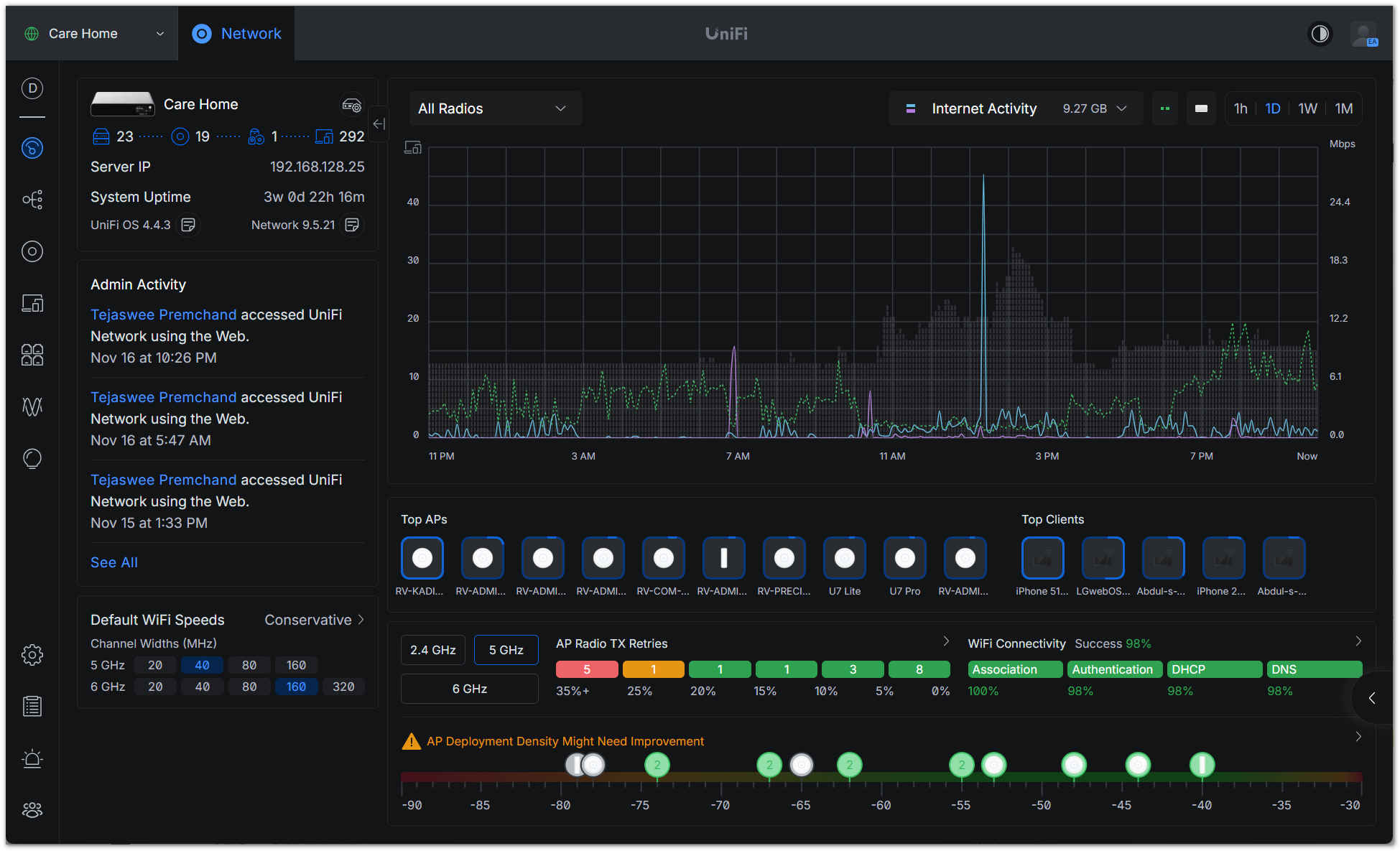 Image 2 – AirView Interference & Airtime Monitoring
AirView’s real-time airtime and interference monitoring provides deep visibility into client behaviour, channel quality and AP performance, ensuring stable wireless connectivity for staff, residents and critical care-systems.
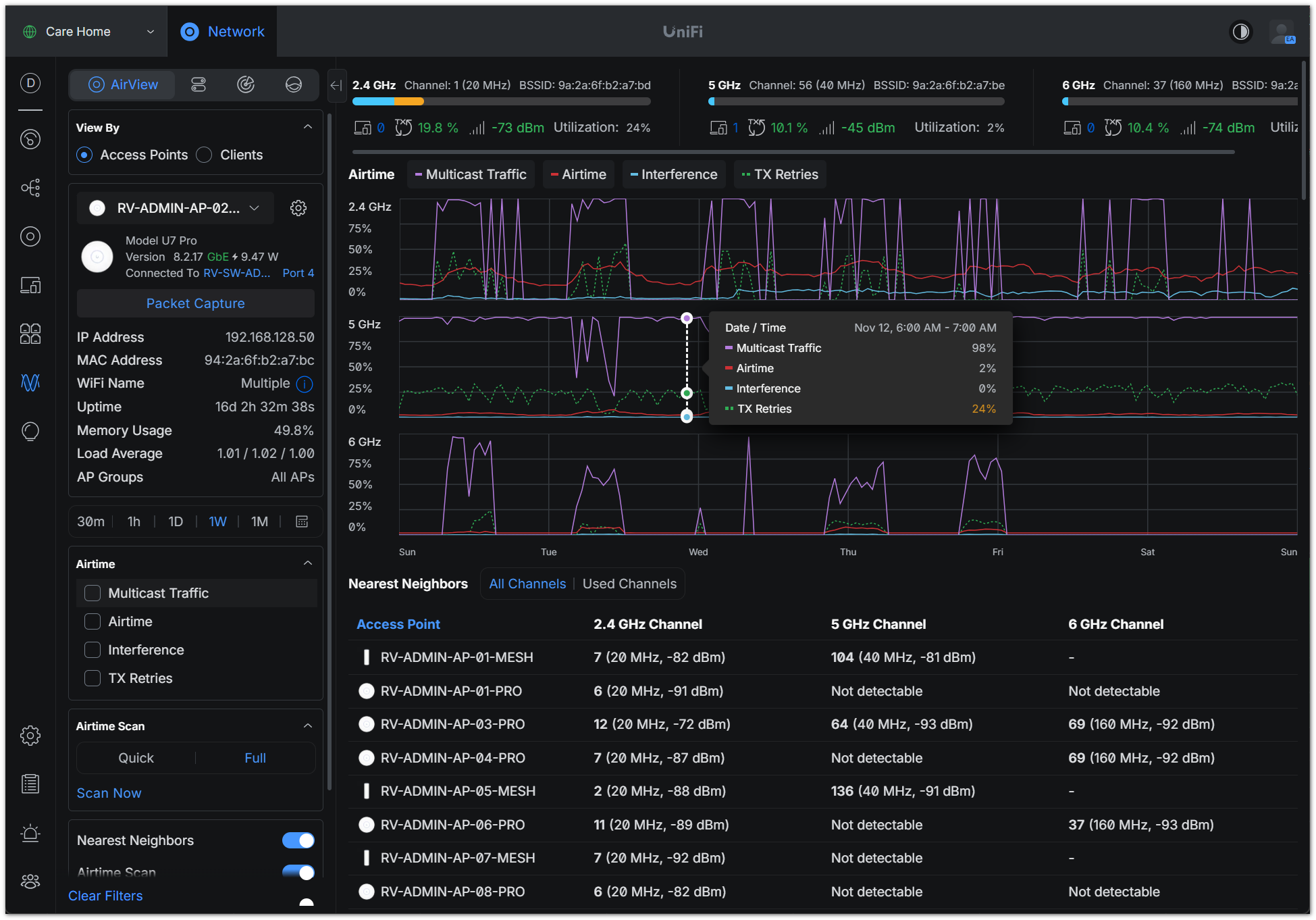 Image 3 – WiFi Spectrum & Channel Utilisation
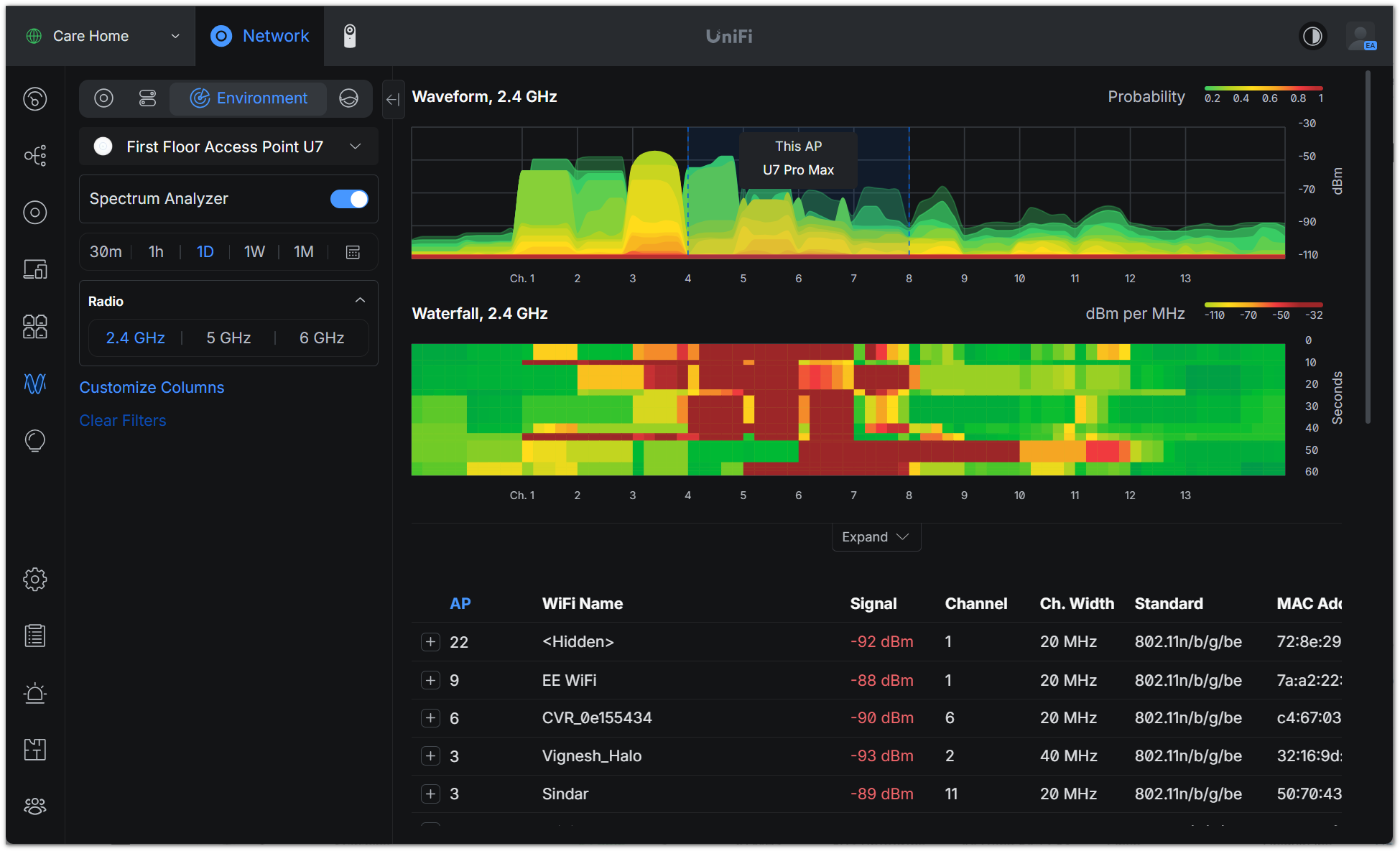
This spectrum analysis view highlights how each access point operates across the 2.4 GHz band, helping us identify congestion, overlapping channels, and sources of interference across the care-home environment.